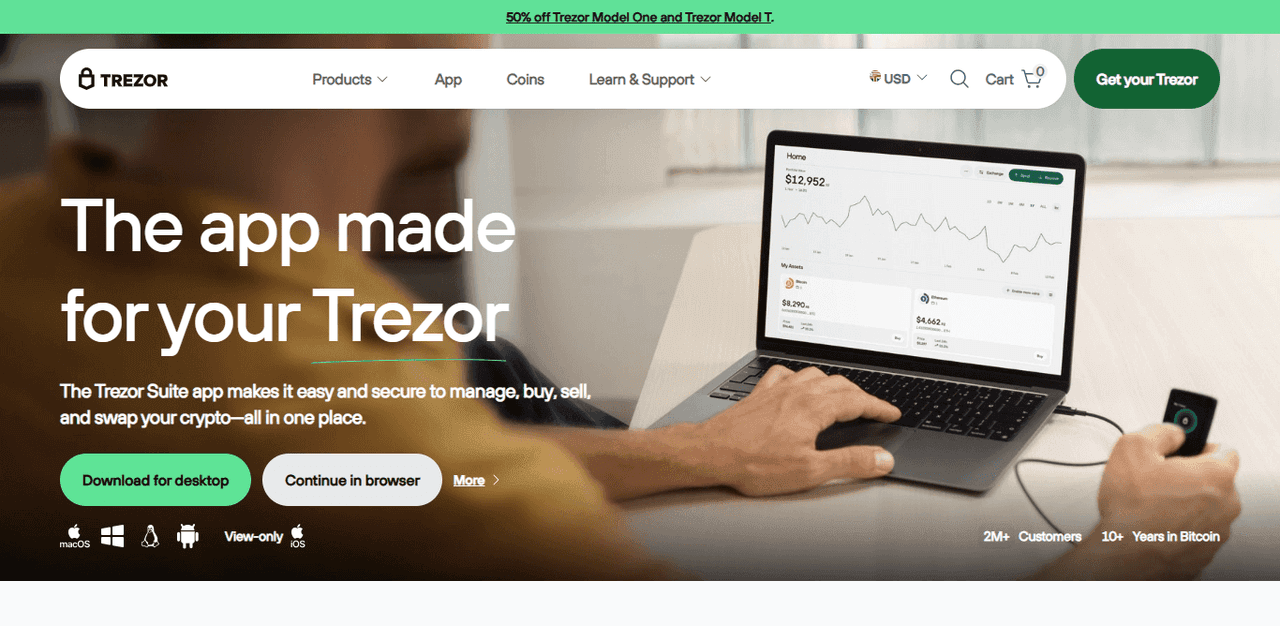
Getting Started with Trezor: The Complete Guide to Securing Your Cryptocurrency
Introduction
In the digital age, cryptocurrency has become a cornerstone of personal finance, investment, and innovation. But with the rise of digital assets comes the critical need for security. Online wallets and exchanges, while convenient, are vulnerable to hacking, phishing, and malware attacks. Hardware wallets offer a solution by storing your private keys offline, giving you full control over your crypto without exposure to the internet.
Among the most trusted hardware wallets is Trezor, a device developed by SatoshiLabs to provide top-tier security while remaining user-friendly. Whether you are a beginner or an advanced user, Trezor gives you the tools to safely manage and protect your cryptocurrencies.
This guide will walk you through everything you need to know to get started with Trezor, from unboxing and setup to advanced security practices and best usage tips.
1. What is Trezor?
Trezor is a hardware wallet designed to securely store cryptocurrency by keeping private keys offline. Private keys are essential for accessing your crypto, and if lost or exposed, your funds can be irretrievably stolen.
Key Features of Trezor:
Offline Storage: Keeps private keys secure and isolated from online threats.
Multi-Currency Support: Compatible with Bitcoin, Ethereum, Litecoin, and hundreds of other cryptocurrencies.
User-Friendly Interface: Works seamlessly with Trezor Suite, a desktop and web application.
Open-Source Firmware: Enables transparency and allows community verification.
Recovery Options: Use a recovery seed to restore your wallet if your device is lost or damaged.
Trezor Models:
Trezor One: A simple and affordable model for beginners.
Trezor Model T: Advanced device with touchscreen, Shamir Backup support, and more features for advanced users.
2. Why a Hardware Wallet is Essential
While online wallets and exchanges offer convenience, they come with significant risks:
Hacking: Online wallets can be compromised.
Phishing: Fake websites and emails can trick users into revealing private keys.
Malware: Keyloggers and viruses can steal sensitive information.
Hardware wallets like Trezor solve these problems by keeping private keys offline and requiring physical confirmation for transactions.
Benefits:
Full control of your private keys.
Easy backup and recovery with a recovery seed.
Compatibility with multiple cryptocurrencies and wallets.
3. Unboxing Your Trezor
When you receive your Trezor device, check that the package includes:
The Trezor device: Either Trezor One or Model T.
USB cable: For connecting the device to your computer.
Recovery card: For safely writing down your recovery seed.
Instructions and stickers: Official documentation and branding.
Security Tip: Check the tamper-evident seal. If it appears broken, do not use the device.
4. Setting Up Your Trezor Wallet
Step 1: Connect Your Device
Plug your Trezor into your computer using the USB cable.
Visit Trezor.io/start to follow official setup instructions.
Step 2: Install Trezor Suite
Trezor Suite is the official application for managing your wallet.
Available for Windows, macOS, Linux, and as a web app.
Step 3: Initialize Your Wallet
Choose Create a new wallet.
The device will generate a 12-24 word recovery seed. Write it down on the recovery card and store it securely.
Step 4: Set a PIN
Choose a secure PIN for your device.
Required every time you access your wallet.
Step 5: Connect Trezor Suite
Open Trezor Suite, pair your device, and start managing your crypto assets.
5. Using Trezor for the First Time
Receiving Cryptocurrency:
Open Trezor Suite.
Select the cryptocurrency you want to receive.
Generate a receiving address.
Share the address with the sender.
Sending Cryptocurrency:
Enter the recipient address and the amount.
Confirm the transaction on your Trezor device.
Transactions are signed offline to ensure security.
Checking Balances and History:
Use Trezor Suite to view balances, transaction history, and manage multiple wallets.
6. Security Best Practices
Even with a hardware wallet, following security best practices is critical:
Never share your recovery seed: Treat it like the key to your bank account.
Verify addresses on the device screen: Never rely solely on your computer screen.
Use a strong PIN: Avoid easy-to-guess numbers.
Keep firmware updated: Protects against vulnerabilities.
Avoid phishing: Only use official websites and software.
7. Advanced Features of Trezor
Trezor isn’t just a wallet—it’s a versatile crypto management device:
Password Manager: Securely store and generate passwords.
Two-Factor Authentication (2FA): Use Trezor as a second-factor device.
Third-Party Integrations: Connect with wallets like MetaMask and DeFi platforms.
Shamir Backup (Model T): Split recovery seeds for extra redundancy.
Crypto Exchange Integration: Buy, sell, and trade crypto safely.
8. Troubleshooting Common Issues
Device Not Recognized:
Ensure Trezor Suite is installed correctly.
Try a different USB port or cable.
Forgot PIN:
Enter the wrong PIN three times. Restore using the recovery seed.
Lost Recovery Seed:
Without it, your crypto cannot be recovered. Always back up securely.
Firmware Update Problems:
Follow on-screen instructions. Do not disconnect during updates.
9. Long-Term Security Tips
Store Recovery Seed Safely: Consider a safe or hidden location.
Redundant Backups: Store copies in separate secure locations.
Regular Firmware Checks: Keep Trezor firmware up to date.
Use Trusted Devices: Avoid connecting to public computers or networks.
10. Why Trezor is the Best Choice
Trezor combines unmatched security with user-friendly design:
Full control of your crypto: Private keys never leave your device.
Ease of use: Manage multiple cryptocurrencies easily.
Open-source firmware: Transparent and auditable.
Advanced features: Password management, DeFi integration, and Shamir Backup.
Trezor is ideal for beginners seeking simplicity and for advanced users needing advanced security and versatility.
Conclusion
Securing your cryptocurrency begins with controlling your private keys. Trezor offers the perfect combination of security, usability, and advanced functionality. By following this guide, you can safely manage, store, and grow your crypto assets with confidence.
Start your secure crypto journey today at Trezor.io/Start.