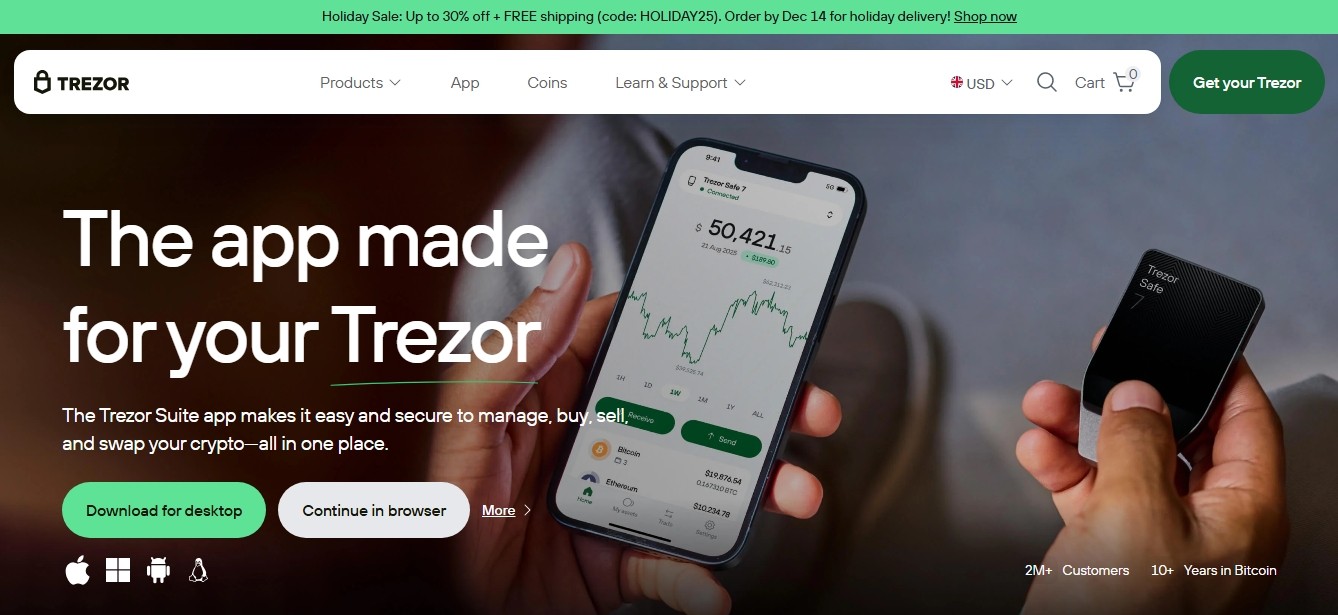
Start Your Secure Crypto Journey with Trezor
Introduction: Why Trezor?
Cryptocurrencies have changed the way we think about money, finance, and ownership. They give you direct control over your wealth, without relying on banks or intermediaries. But with this power comes responsibility—protecting your crypto is critical.
Trezor is a leading hardware wallet designed to keep your digital assets safe. Unlike software wallets, which can be compromised by malware or phishing attacks, Trezor stores your private keys offline. This means your crypto remains secure even if your computer or phone is infected.
This guide will take you step by step through everything you need to know to start using Trezor, from unboxing and setup to advanced security tips and everyday use.
1. Understanding Hardware Wallets
Before you start, it’s important to understand the role of hardware wallets.
1.1 What Is a Hardware Wallet?
A hardware wallet is a physical device designed to store your cryptocurrency private keys offline. These keys are essentially the “passwords” that allow you to access and spend your crypto. By keeping them offline, hardware wallets protect your funds from hacking, malware, and phishing attacks.
1.2 Why Trezor?
Trezor is recognized as a pioneer in the hardware wallet space. Its features include:
Open-source firmware, meaning anyone can audit the code.
Compatibility with hundreds of cryptocurrencies.
Secure backup and recovery options.
Easy-to-use interface for beginners and experts alike.
1.3 How Trezor Works
When you sign a transaction with Trezor, the device internally confirms and signs it using your private keys. Only the signed transaction is sent to the blockchain—your private keys never leave the device, keeping your funds completely secure.
2. Getting Started with Your Trezor
Setting up Trezor is simple. Follow these steps to get started.
2.1 Unboxing Your Device
Your Trezor package typically contains:
The Trezor hardware wallet (Model One or Model T)
USB cable
Recovery seed card
Quick start guide
Before using your device, inspect the packaging. Trezor ships with tamper-evident seals. If the packaging looks compromised, do not use the device.
2.2 Connecting Your Trezor
Connect your Trezor to your computer using the provided USB cable.
Visit Trezor.io/start to launch the official setup interface.
Follow the instructions on-screen to initialize your device.
2.3 Installing Firmware
Firmware is the operating system of your Trezor device. Always install the latest firmware via the official Trezor website. Firmware updates include security enhancements and new features. Never install firmware from unofficial sources.
3. Securing Your Wallet
Trezor’s security features ensure that only you can access your crypto.
3.1 Creating a PIN
During setup, Trezor will prompt you to create a PIN. This protects your device if it’s lost or stolen. Choose a PIN that is difficult for others to guess but easy for you to remember. Avoid simple sequences like 1234.
3.2 Backup with Recovery Seed
Trezor generates a 24-word recovery seed. This is the only way to recover your wallet if your device is lost or damaged.
Best practices:
Write your recovery seed on the provided card; do not store it digitally.
Store it in a secure place, ideally in multiple locations.
Never share your recovery seed. Trezor employees or support will never ask for it.
3.3 Advanced Security Options
Trezor offers additional layers of security:
Passphrase Protection: Adds a hidden wallet layer accessible only with an extra passphrase.
Device Verification: Confirms that firmware has not been tampered with.
Two-Factor Authentication (2FA): Can be used with compatible services for added security.
4. Adding and Managing Cryptocurrency
Once your Trezor is secure, you can start managing crypto.
4.1 Supported Coins
Trezor supports hundreds of cryptocurrencies, including:
Bitcoin (BTC)
Ethereum (ETH)
Litecoin (LTC)
Bitcoin Cash (BCH)
XRP, and many more
Check the official Trezor website for a complete and updated list.
4.2 Using Trezor Wallet Interface
Trezor Wallet provides a user-friendly platform to:
Send and receive cryptocurrencies
Check balances
Manage multiple wallets
Integrate with DeFi apps
4.3 Sending and Receiving Crypto
Receiving Crypto:
Open Trezor Wallet and select the cryptocurrency.
Generate a receiving address.
Share the address with the sender to receive funds.
Sending Crypto:
Enter the recipient’s address in Trezor Wallet.
Verify the address on your Trezor device.
Confirm and sign the transaction on the device.
Always verify addresses on the device screen to prevent malware from manipulating them.
5. Everyday Use of Trezor
Trezor is not just for storing crypto—it’s for active use.
5.1 Third-Party Integrations
Trezor integrates with:
Exchanges for trading directly without exposing private keys
DeFi platforms for decentralized finance
Portfolio trackers to monitor assets in real-time
5.2 Managing Multiple Accounts
Trezor allows multiple accounts per cryptocurrency. This is useful for:
Separating personal and business funds
Managing different investment strategies
Budgeting and financial planning
5.3 Mobile Access
Trezor can be used with mobile devices via compatible wallets, allowing you to manage your crypto on the go while keeping your keys offline.
6. Best Practices for Long-Term Security
Keeping your crypto secure requires ongoing attention.
6.1 Physical Security
Store your Trezor in a safe location.
Consider fireproof and waterproof storage for your recovery seed.
6.2 Online Security Hygiene
Only use official Trezor websites and apps.
Avoid phishing attempts, suspicious links, and emails.
Keep your computer, browser, and Trezor Bridge software updated.
6.3 Firmware Updates
Regularly update your Trezor firmware to stay protected against vulnerabilities. Updates are delivered through the official Trezor Wallet interface.
7. Troubleshooting and Support
Even experienced users may encounter issues. Trezor provides secure support without compromising your wallet.
Visit Trezor Support for guides and FAQs.
Join community forums for tips and advice.
Never share your recovery seed. Trezor support will never request it.
8. Advanced Features and Ecosystem
Trezor offers features beyond basic storage:
Trezor Suite: Desktop and web app for advanced portfolio management.
Third-Party App Integrations: Access DeFi, NFTs, and staking services.
Passphrase Wallets: Create multiple hidden wallets with unique passphrases.
Multi-Currency Support: Manage all your crypto from one device.
These features make Trezor suitable for both beginners and advanced users.
9. Conclusion: Take Control of Your Crypto
Starting with Trezor is more than owning a hardware wallet—it’s gaining control over your digital assets. From setup to everyday use, Trezor combines simplicity and security, empowering you to participate confidently in the crypto ecosystem.
Your crypto is secure, private, and always under your control. Whether you’re a first-time user or an experienced investor, Trezor is your gateway to safe and reliable crypto management.
Connect your Trezor, secure your wallet, and start your journey toward financial sovereignty today.